Ecommerce order fulfilment checklist for small online shops
A practical checklist for small online shops that want to dispatch orders accurately, reduce returns and protect margins. Covers stock control, picking, packing, dispatch routines, returns and the numbers worth tracking.
By Amelia Hughes · Published 8 October 2026 · Updated 8 October 2026 · 10 min read
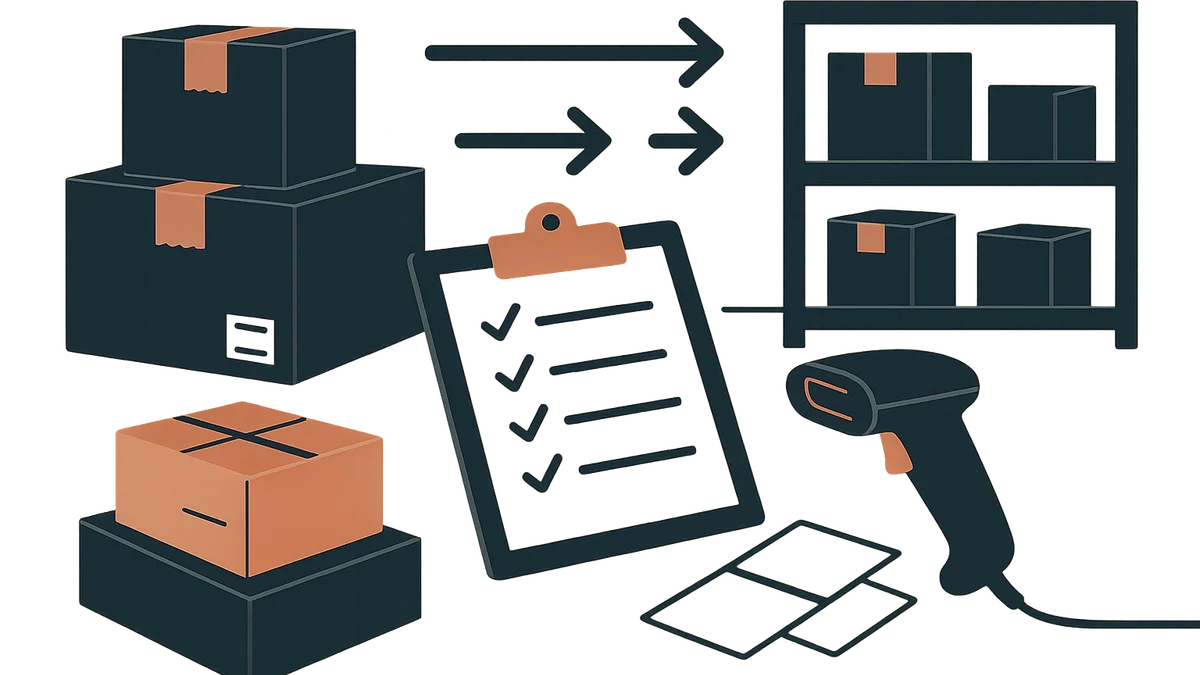
If you run a small online shop, order fulfilment is not a back-office detail. It is the point where your promise to the customer becomes a parcel, a tracking email, a return label and, sometimes, a review.
When fulfilment goes wrong, the damage is usually immediate. You may lose money on postage, spend time correcting mistakes, and create avoidable complaints. If the same errors keep happening, customers begin to assume the shop is unreliable rather than simply busy.
This checklist breaks fulfilment into decisions you can actually manage: what you promise at checkout, how you control stock, how you pick and pack, when parcels leave, and how you handle returns. It is written for small shops that may be doing this in-house, partly in-house, or with a fulfilment partner.
Key takeaways
- Fulfilment starts before an order arrives: set clear delivery, cut-off and returns terms first.
- Stock accuracy matters because overselling creates refunds, delays and bad reviews.
- Picking and packing need a repeatable routine, not memory and good intentions.
- Decide which tasks you will do yourself and which should move to a 3PL or fulfilment partner.
- Track a small set of fulfilment numbers so you can spot problems early.
What ecommerce order fulfilment means for a small shop
Order fulfilment is everything that happens after a customer clicks buy: the order is accepted, stock is checked, the item is picked, packed, dispatched, tracked and, if necessary, returned and refunded.
For a small shop, the challenge is not only doing these steps, but doing them consistently while keeping costs under control. A process that works for five orders a day may break down at twenty if labels, stock locations and packing materials are all in different places.
The practical aim is simple: the customer should receive the right item, on time, in acceptable condition, with clear communication throughout.
Start with the customer promise
Before you tidy up warehouse shelves or buy better tape, decide exactly what you are promising at checkout. Your fulfilment process has to match the promise you make.
Check these points first
- Delivery times: say when an order is likely to arrive, not just when it leaves your premises.
- Cut-off points: set a clear daily cut-off for same-day dispatch, if you offer it.
- Shipping methods: explain standard, express or tracked options in plain English.
- Returns terms: make it clear who pays return postage, what condition items must be in, and how refunds are handled.
If your site says “dispatch today” but parcels only leave once a week, you are creating disappointment. A smaller promise that you can keep is better than a larger promise that keeps slipping.
Check stock accuracy before you accept an order
Many fulfilment problems start as stock problems. If your website shows an item as available when it has already sold out, the order may need a refund, a delay or a substitution. None of those are ideal for the customer or your margin.
What to put in place
- Live inventory: your site should reflect stock levels as closely as possible.
- Safety stock: keep a small buffer for items that sell quickly or are hard to replace.
- Low-stock alerts: set warnings before a line runs out, not after it has gone.
- Regular cycle counts: count selected products frequently rather than waiting for a full stocktake.
For a small shop, the main decision is whether your stock count is reliable enough to take orders automatically. If not, you may need manual checks on your fastest-moving lines, or a tighter link between your shop platform and your inventory system.
Example: a product that keeps overselling
You sell candles in three scents. One scent sells faster than the others and also gets mixed up during replenishment. If customers keep ordering a scent you do not actually have, the fix is not just “watch stock more carefully”. You may need to give that line a separate bin, tighter reorder point and an alert when the last few units are sold.
Confirm the picking process
Picking is the step where you collect the right item from stock before packing it. It sounds simple, but this is where many errors happen, especially if products look similar or storage is improvised.
Make picking hard to get wrong
- Product locations: every item should have a fixed, recorded location.
- Bin labels: shelves, boxes or racks should be clearly marked.
- Picking lists: print or display orders in a format that reduces confusion.
- Order priority: decide which orders are urgent and who handles them first.
If you are picking more than a few orders a day, think about the route through your storage area. Grouping items logically reduces walking time and lowers the chance of picking the wrong line.
For shops with similar products, use a double-check step before packing. That may mean matching SKU codes, scanning barcodes, or using a second person for high-value orders.
Inspect packing standards before you dispatch
Packing should protect the item, not just look tidy. Poor packaging leads to damaged goods, returns and replacement costs. Over-packaging adds waste and can raise postage costs.
Ask these questions about every parcel type
- Is the outer box or mailer strong enough for the product?
- Do fragile items need bubble wrap, inserts or void fill to stop movement?
- Would a branded box help the customer, or would a plain practical pack be better value?
- Are you including anything that adds cost without improving the customer experience?
Branded packaging can be useful, but only if it does not increase breakage or waste. For a small shop, the best choice is often packaging that is neat, protective and easy to source again.
Example: choosing between presentation and protection
If you sell ceramics, a slim branded mailer may look better on the unboxing video, but a stronger carton with proper internal padding is usually the safer choice. If the customer receives a broken item, presentation becomes irrelevant.
Set a dispatch routine that staff can follow
Dispatch is not just posting parcels. It is the point where orders leave your control, so your routine needs to be clear and repeatable.
Define who does what
- Who prints labels?
- Who checks the final order against the packing list?
- What time do parcels leave the premises?
- Who records tracking details and sends them to the customer?
If more than one person handles dispatch, create a simple handover process. That might be as basic as a signed dispatch log, a shared spreadsheet or a system-generated status update.
The key point is traceability. If a parcel is questioned later, you need to know when it was packed, who handled it and which tracking number was assigned.
Build a returns and refunds process that is easy to run
Returns are part of ecommerce, not an exception. If your process is awkward for customers, it will also be awkward for you when the emails start coming in.
Keep the process simple
- State how the customer starts a return.
- Explain what evidence, if any, you need.
- Confirm where the item should be sent.
- Say when inspection happens and when refunds are issued.
Internally, decide how you will check returned items, who authorises refunds and how you deal with damaged, used or missing items. If this is left vague, returns can sit unresolved and tie up cash.
It also helps to separate two issues that customers often combine: whether the item is eligible for return, and whether the item was faulty. Those may follow different paths in your process.
Decide what stays in-house and what goes to a 3PL
A 3PL, or third-party logistics provider, stores, picks, packs and dispatches orders on your behalf. For some small shops, outsourcing is the right move. For others, it adds cost and removes control without solving the underlying problem.
Questions to ask before you outsource
- Are your order volumes steady enough to justify the handover?
- Do you need faster dispatch or wider delivery coverage than you can manage yourself?
- Are stock errors, space limits or staffing gaps slowing you down?
- Can the partner integrate with your shop platform and reporting needs?
Keep high-complexity or high-value orders under closer control if that reduces errors. Outsource repetitive work first if the main issue is time, storage or labour.
A useful rule is this: do not outsource a process you have not understood yourself. You need to know what good fulfilment looks like before someone else can do it for you.
Create a daily and weekly fulfilment checklist
A checklist turns good intentions into a routine. Keep it short enough that it gets used.
Daily checklist
- Review new orders and confirm any urgent deadlines.
- Check stock for items sold overnight.
- Pick and pack in priority order.
- Print labels and dispatch parcels by the cut-off time.
- Send tracking details to customers.
- Record exceptions: missing stock, damaged items, delayed collections.
Weekly checklist
- Check fast-moving stock against recorded counts.
- Review low-stock alerts and place supplier reorders.
- Look at recurring picking or packing errors.
- Review returns and identify common reasons.
- Check whether carrier collections, label printing or packing supplies need adjusting.
If you only do one formal review each week, make it about exceptions. Most fulfilment systems look fine until you inspect the orders that were late, returned or damaged.
Track the numbers that actually matter
You do not need a complicated dashboard to know whether fulfilment is working. A small shop usually needs only a few measures to reveal the main problems.
| Measure | What it tells you | What to do if it worsens |
|---|---|---|
| Dispatch accuracy | Whether the right items are being sent | Review picking lists, bin labels and double-check steps |
| Late orders | Whether your promise and capacity still match | Adjust cut-off times, staffing or order priorities |
| Returns | Whether products, descriptions or packing are causing issues | Review product pages, packaging and quality checks |
| Damaged items | Whether packaging is protecting the product properly | Upgrade materials or change packing methods |
These numbers are useful because they lead to decisions. If you cannot act on a metric, it is probably not the right one to track every week.
Common mistakes small shops make
Most fulfilment problems are not mysterious. They usually come from a decision that was never made clearly enough.
1. Promising faster delivery than you can deliver
Fix: set delivery promises from your real dispatch capacity, not from your best-case day.
2. Relying on memory for stock locations
Fix: label storage properly and keep a record of where products live.
3. Packing every order the same way
Fix: match packaging to fragility, size and postage cost.
4. Treating returns as a nuisance rather than a process
Fix: create a clear path from return request to inspection to refund.
5. Waiting too long to reorder fast-moving stock
Fix: set reorder points and low-stock alerts before lines run out.
6. Outsourcing too early, or too late
Fix: compare control, cost and capacity before you decide.
A simple fulfilment decision sequence
If you want a straightforward way to improve fulfilment, work through these decisions in order:
- Set a clear customer promise for dispatch, delivery and returns.
- Check whether stock records are reliable enough to accept orders automatically.
- Make picking and packing repeatable with labels, lists and a standard routine.
- Define who handles dispatch and how tracking is recorded.
- Build a simple returns process that is easy to follow.
- Decide what should stay in-house and what should move to a fulfilment partner.
- Review the numbers that show whether the process is holding up.
Useful source for small organisations
If you are also checking how your business handles customer and personal data as part of fulfilment, the ICO provides advice for small organisations here: https://ico.org.uk/for-organisations/advice-for-small-organisations/.
The main practical point is to keep your process consistent: clear promises, accurate stock, controlled dispatch and a returns route that does not create extra work for every order.
Final check before your next order rush
- Are your delivery promises realistic?
- Do your stock records match what is actually on the shelf?
- Can someone else in the business pick and pack an order without guessing?
- Do you know who sends tracking details and when?
- Can you process a return without searching for the policy or the box it came in?
If any of those answers is unclear, fix that part first. Fulfilment becomes easier when every step has one owner, one rule and one place to check.
Related articles
No articles published yet.