How to improve repeat purchases before expanding a small business
Before you open a new location, hire more staff or spend heavily on marketing, make sure customers are buying again. This guide shows how to find retention problems, improve service and measure whether expansion is actually ready.
By Daniel Foster · Published 8 October 2026 · Updated 8 October 2026 · 12 min read
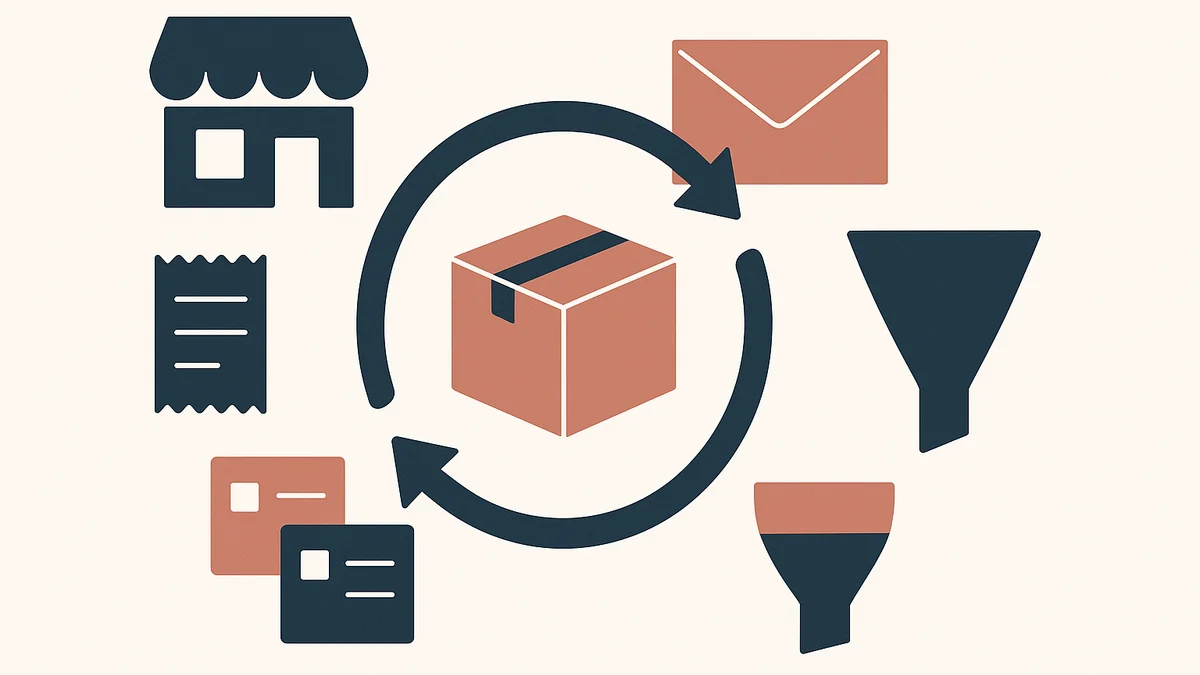
Before you expand, you need to know whether your current customers come back. If they do not, extra sales effort can simply bring in more one-time buyers, which is often expensive and hard to sustain. Repeat purchasing is not the only sign of a healthy business, but it is one of the clearest signals that your offer, service and pricing are working well enough to support growth.
This article sets out a practical sequence: check whether repeat buying is strong enough, find out why customers do not return, fix the main problems, and only then decide whether expansion makes sense. For official guidance on setting up or changing the structure of your business, see GOV.UK — Set up a business and GOV.UK — Set up a limited company.
Why repeat purchases matter before you expand
Repeat revenue is usually steadier than chasing new customers
New-customer growth can look encouraging on a sales chart, but repeat revenue is often more dependable. Returning customers already know your offer, have lower friction when ordering again, and are easier to serve if you have a consistent process. That does not mean you should ignore acquisition. It means you should avoid building expansion plans on demand that has not yet proved durable.
A simple rule helps here: if people buy once but rarely return, your next step is usually to improve the buying experience, not to increase your footprint.
Growth becomes risky when your customer retention is weak
Weak retention makes expansion risky because every extra sale has to replace lost customers as well as fund growth. That can create pressure to discount, chase volume or widen the product range too early. It may also expose delivery problems, staffing gaps or quality issues that were hidden while the business was smaller.
Practical takeaway: if you are losing customers after one purchase, expansion can magnify the problem rather than solve it.
Check whether your business is ready to scale
Look at repeat purchase rate, not just total sales
Total sales can rise even when the customer base is unstable. Repeat purchase rate tells you how many customers return within a set period. The exact period depends on your business: a café may look at weekly or monthly repeat visits, while a manufacturer of workplace supplies may track repeat orders over several months.
The point is not to find a perfect benchmark. It is to understand whether your existing customers create a base you can build on.
Separate one-off buyers from loyal customers
Break your customer list into at least two groups: one-time buyers and repeat buyers. Then compare what they bought, how they found you, and which group is more profitable once fulfilment and service costs are included. You may discover that some channels bring plenty of first-time sales but very few returning customers.
- One-off buyers: useful for testing demand, but not enough on their own to support expansion.
- Repeat buyers: evidence that your offer is meeting a need well enough to be bought again.
Identify the products, services or channels that bring people back
Not every part of your business will perform equally. A particular product line, service package or sales channel may drive most repeat purchases. Identify those patterns before you invest in more stock, staff or advertising. If repeat customers mainly come from referrals or direct email, for example, that tells you something very different from repeat buying driven by marketplace promotions.
Example: a small trade business may find that customers who buy a maintenance package are far more likely to reorder than customers who only buy the lowest-cost option. In that case, expansion should probably build around the maintenance relationship, not just the cheapest entry product.
Find out why customers do not buy again
Review customer feedback, refunds and support queries
You do not need a complex research exercise to start. Look at what customers say in reviews, support emails, complaint logs, refund requests and post-sale follow-ups. The most useful clues are often plain and repetitive: late delivery, confusing instructions, unclear pricing, stockouts, or a product that did not meet expectations.
If the same complaint keeps appearing, treat it as a process problem, not an isolated incident.
Spot friction in delivery, pricing, product quality or service consistency
Customers often do not return for reasons that are easier to fix than they first appear. Common friction points include:
- delivery taking longer than expected;
- pricing that feels unclear or unfair once extras are added;
- product quality varying from order to order;
- service standards depending too much on which member of staff helps them;
- onboarding or setup being too complicated after purchase.
When you review these issues, be honest about whether the problem is the offer itself or the way it is delivered.
Map the main reasons for churn, the customers you lose after one purchase
Churn simply means customers stop buying from you. A basic churn map can help you see patterns. List the main reasons people leave, how often they appear, and which customer type is most affected. You may find, for example, that price-sensitive customers leave after one purchase, while larger clients leave after a poor handover or missed deadline.
Use this question: if a customer never returned, what is the most likely reason?
Improve the customer experience first
Make fulfilment, onboarding and after-sales service reliable
Repeat buying improves when customers trust the basics. That means orders arrive as promised, onboarding is simple, and after-sales support is responsive. If you sell a service, consistency matters just as much as politeness. If you sell products, packaging, delivery updates and returns handling all shape whether customers feel confident ordering again.
Reliability is often more valuable than trying to add clever extras before the core journey works properly.
Set clearer expectations on price, timing and what is included
Many repeat purchases are lost because the first buying experience feels less straightforward than the customer expected. Make it easier to understand what is included, what costs extra, when delivery or completion will happen, and what happens if something goes wrong. Clear expectations reduce disappointment and cut down on avoidable queries.
That is especially important if your business offers variable work, custom orders or add-on services.
Fix the few service problems that drive most repeat loss
You rarely need to improve everything at once. Start with the small number of problems that seem to drive most lost repeat business. For one business, that may be response times. For another, it may be inaccurate stock information. For a third, it may be inconsistent handovers between sales and fulfilment.
- Identify the top three complaints or service failures.
- Decide who owns each fix.
- Set a simple deadline.
- Check whether repeat orders improve after the change.
Build simple retention systems
Use post-purchase emails, reorder reminders and follow-up calls where relevant
A retention system does not need to be sophisticated. A short follow-up email can check satisfaction, explain how to get support, or remind customers when replenishment may be due. For higher-value or relationship-led businesses, a short call after delivery or project completion may be worth the effort.
The aim is to stay useful, not intrusive. If customers see your message as help, they are more likely to return.
Create a basic loyalty offer that rewards return buying without cutting margins too far
Loyalty offers can work, but they need discipline. A discount that attracts repeat orders may still damage margin if it is too generous or poorly targeted. Consider lower-cost rewards first: priority booking, small add-ons, free delivery thresholds, or access to a preferred service channel. The offer should encourage another purchase without training customers to wait for a bargain.
Segment customers so frequent buyers get different messages from one-time buyers
Segmentation means grouping customers by shared characteristics so you can speak to them differently. In practice, that might mean separating frequent buyers, dormant customers and first-time purchasers. Each group needs a different message. A repeat buyer may respond to replenishment reminders or account reviews; a one-time buyer may need reassurance, a usage tip or a reason to come back.
Strengthen product and pricing decisions
Decide whether the issue is the product itself, the range, or the price point
Sometimes repeat buying is weak because the main offer is wrong. Other times the product is fine but the range is confusing, or the pricing sits at the wrong level for the market. Separate those questions before changing too much. You do not want to expand the wrong line simply because it sold once.
If customers like the product but not the range, simplify. If they buy but do not reorder because consumption is irregular, look at reminders or pack sizes. If price is the main barrier, test whether the issue is value perception rather than absolute cost.
Test bundles, subscriptions or replenishment offers if they suit your business
Some businesses can improve repeat buying through bundles or subscriptions. Others can offer a replenishment model, such as a recurring supply schedule. These approaches work best when customers use the product regularly and can see the benefit of convenience. They are less suitable where demand is occasional or highly project-specific.
Test carefully before rolling out any pricing change. Keep the trial small, track margin, and ask whether the offer makes the customer’s decision easier.
Avoid expanding the range before the core offer proves repeat demand
Range expansion can look like progress, but it often spreads attention too thin. If the core offer has not yet proved repeat demand, adding more products can create inventory risk, operational complexity and more training needs. It is usually better to make one offer work well than to manage several weak ones.
Measure the right numbers each month
Repeat purchase rate
Track how many customers buy again in a period that suits your business. Look at trends, not just a single month. The point is to see whether repeat behaviour is improving after you change service, pricing or communication.
Customer retention and churn
Retention shows how many customers stay active. Churn shows how many leave. Together, they help you see whether growth is coming from a stable base or from a constant replacement cycle.
Average order value and customer lifetime value
Average order value is the amount spent per order. Customer lifetime value is the value a customer generates over the time they stay with you. These numbers matter because repeat buying can increase both, even if the business does not acquire many more customers immediately.
Margin after retention offers and service costs
Do not judge repeat-purchase activity on sales alone. Check whether loyalty discounts, follow-up calls, support time and returns handling still leave enough margin. A retention tactic that increases orders but weakens profit may not support expansion.
| Measure | What it tells you | Why it matters before expansion |
|---|---|---|
| Repeat purchase rate | How often customers come back | Shows whether your core offer has staying power |
| Retention and churn | Who stays and who leaves | Helps you spot weak points in the customer journey |
| Average order value | What customers spend per order | Shows whether repeat buyers are growing account value |
| Customer lifetime value | Total value over the customer relationship | Supports better decisions on acquisition and retention spend |
| Margin after retention costs | Profit after offers and support | Tells you whether growth is financially sensible |
Decide when expansion is sensible
Expand only after repeat buying is consistent and operational issues are under control
Expansion makes more sense once repeat buying is dependable and your main service problems are under control. You do not need perfection, but you do need enough consistency to believe the business can handle more demand without damaging the customer experience.
If customers are still leaving because of basic issues, fix those first. Otherwise, expansion simply increases the scale of your weaknesses.
Choose the next step: more stock, a new location, new staff or new marketing
The right expansion step depends on the bottleneck. If demand is there but stock runs out, more inventory may be the answer. If service quality is strained, new staff or better training may matter more than more promotion. If the current market is saturated but repeat buyers are strong, a new location or channel may make more sense.
Choose the bottleneck first, then the investment.
Use small tests before committing significant capital
Before taking on long-term costs, test the next move on a smaller scale. Try a limited stock increase, a pilot channel, a short-term hire or a test campaign. This helps you learn whether the business can absorb expansion without hurting service or margin.
Illustrative example: a retailer might test a new range in one category before adding multiple lines; a service business might trial an extra delivery day before opening a new site.
Common mistakes small businesses make
Growing too fast on first-time sales
First-time sales can flatter the business. They are useful, but they do not prove repeat demand. If you expand too quickly on the strength of acquisition alone, you may end up with higher costs and no stronger customer base.
Copying competitors instead of fixing customer pain points
What works for another business may not solve your problem. If your customers are leaving because of service inconsistency, a new product line will not help much. Start with the reasons your own customers stop buying.
Running promotions that attract bargain hunters, not loyal customers
Promotions can lift volume, but they can also attract people who only buy at a discount. If repeat buying is the goal, build offers that encourage a relationship, not just a one-off bargain.
Practical next steps to take this month
Audit your repeat customers and churn reasons
Pull together your last few months of orders, refunds, reviews and support notes. Separate returning customers from one-time buyers and write down the main reasons people do not come back.
Pick three retention improvements to test
Choose a small number of changes you can actually manage: a clearer follow-up email, a simpler returns process, a better delivery update, or a modest loyalty offer. Keep the changes specific so you can see what works.
Review results before planning any expansion
After a short test period, compare repeat buying, margin and customer feedback. If the numbers and the customer response improve, you have a stronger base for expansion. If they do not, keep improving the core offer before you spend more.
Key takeaways
- Repeat purchases are a stronger sign of readiness than total sales alone.
- Find out why customers leave before you spend on expansion.
- Fix fulfilment, service consistency and pricing clarity first.
- Measure retention, churn, lifetime value and margin every month.
- Expand only when the current business is stable enough to support it.
Next step: this week, export your last three months of orders and identify the top reasons first-time buyers did not return. Then pick three fixes and test them before you approve any expansion spend.
Related articles

How to plan sustainable small business growth
A practical guide to growing a small business without stretching cash flow, people or processes beyond what they can support.
30 September 2026 · 6 min read