How to manage business cash flow during slow months
Slow months can expose weak cash flow even in healthy businesses. The answer is usually not blunt cuts, but better timing: forecast early, collect money faster, protect essential spending and use finance only when you know the size of the gap.
By Emily Walker · Published 15 October 2026 · Updated 15 October 2026 · 11 min read
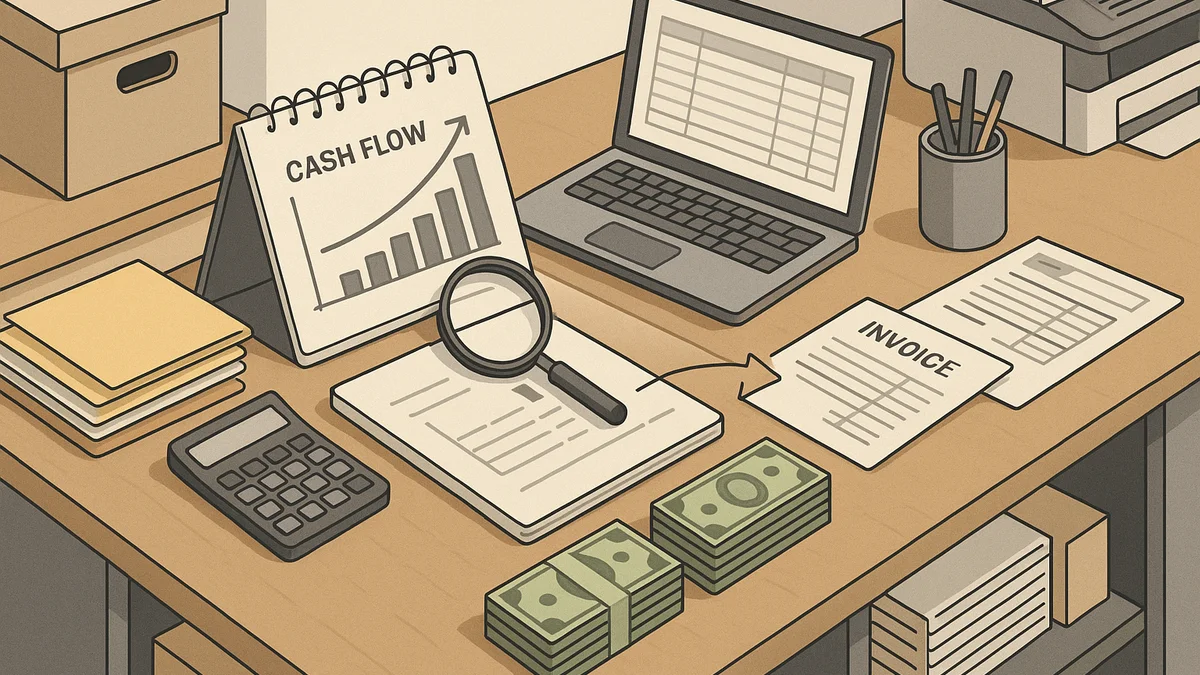
A quiet month after a strong trading period can look manageable on paper and still create real pressure in the bank account. Sales dip, but wages, VAT, rent, supplier bills and loan repayments do not stop. For many UK small businesses, the problem is not whether the business is profitable over the year; it is whether there is enough cash to pay what is due on time.
The practical answer is usually not to slash costs indiscriminately. That can damage service, stretch your team and make recovery harder when demand returns. A better approach is to understand where cash is leaving the business, bring cash in sooner where you can, slow unnecessary outgoings and then decide whether any funding is needed to bridge a genuine gap.
For limited companies, remember that directors remain responsible for the company’s records, accounts and performance even if day-to-day finance work is delegated. GOV.UK sets out those responsibilities here: https://www.gov.uk/running-a-limited-company.
Why a profitable month can still leave you short of cash
Profit and cash are related, but they are not the same thing. Profit measures whether income exceeded costs over a period. Cash flow measures when money actually moves in and out of the business. A business can invoice well, report a decent profit and still struggle if customers pay late, stock has been bought in advance or tax bills fall due before the receipts arrive.
This is why slow months often feel worse than they look in the accounts. If you have built up invoices that are not yet paid, the sales have happened but the cash has not arrived. If you have just paid suppliers or payroll, the bank balance can fall quickly even if future work is already booked.
Once you accept that cash timing matters as much as turnover, the right questions become clearer: when does money leave, which payments must be met first, and which receipts can realistically be brought forward?
Find the pressure points before you make changes
Start by mapping the places where cash is most likely to tighten. In many small businesses, the pressure points are predictable: rent or rates, payroll, tax payments, stock purchases, supplier terms, and customers who pay late or in uneven chunks.
Look at three timing questions
- When does cash leave? Note the dates for payroll, VAT, Corporation Tax, rent, loan repayments and supplier bills.
- Which costs are fixed? Separate recurring commitments from costs you can delay or reduce without causing disruption.
- Who pays slowly? Identify customers whose payment habits create the biggest gap between delivery and cash receipt.
This exercise often reveals that the problem is not all spending. It is a few large items landing before receipts, or one or two customers dragging cash out of the business for longer than expected. Once you see the pattern, you can act on the timing rather than trying to solve everything at once.
Build a short rolling cash forecast
The first practical step in a slow month is to build a rolling cash forecast for the next eight to thirteen weeks. The exact length matters less than the discipline: update it weekly, compare forecast and actuals, and use it to spot shortfalls before they become urgent.
A rolling forecast works better than a static monthly budget because it shows what is coming next, not just what happened last month. It should include expected customer receipts, tax payments, payroll, supplier due dates, rent, card and loan payments, and any planned spending that is not essential.
Keep it simple enough that you will actually use it. A basic spreadsheet is usually enough for a small business. The point is not to produce a polished finance model; it is to know whether next month’s bank balance is likely to dip below a safe level and, if so, when.
A simple weekly forecast approach
- Start with the opening bank balance.
- List money expected in each week, not just each month.
- List all unavoidable payments by date.
- Add likely discretionary spending only if it is truly planned.
- Review the closing balance and note any week where the account looks tight.
If a forecast shows a shortfall in week six, you have options. If it shows a shortfall tomorrow, the options are narrower and more expensive. The value of the forecast is that it buys you time.
Bring money in sooner
In slow months, the fastest improvement is often to shorten the time between doing the work and receiving the cash. That does not always mean changing the underlying economics of the business. It usually means being stricter about process.
Invoice promptly and clearly
Send invoices as soon as the work is complete or at the billing milestone agreed with the customer. Make sure invoices are easy to understand and include the payment terms, amount due and due date. GOV.UK notes that invoices must include certain information, including how much the customer needs to pay and when payment is due, in situations where both parties are VAT-registered in a business-to-business transaction: https://www.gov.uk/invoicing-and-taking-payment-from-customers.
A delayed invoice is a delayed payment. If your process waits until the end of the week or the end of the month, you are extending the cash gap for no good reason.
Tighten payment terms where you can
If you regularly work with customers who pay late, review whether your standard terms are still suitable. For some businesses, shorter terms are realistic; for others, they are not. The trade-off is straightforward: stricter terms improve cash flow, but pushing too hard on a valuable customer can damage the relationship. The right answer depends on how replaceable that customer is and how strong your position is.
Use deposits or staged billing for larger jobs
For larger projects, ask for a deposit or split billing into stages. That spreads the risk and reduces the amount of work you fund before being paid. It is often easier to agree this before the job starts than to renegotiate later, so build it into the quote or contract rather than presenting it as a last-minute request.
Illustrative example: a designer, contractor or consultant taking on a three-month project may bill an initial deposit, then invoice at agreed milestones, rather than waiting until the end. That can make a major difference in a slow period when other income has dipped.
Chase overdue invoices consistently
Late payment is not solved by a single reminder sent when you remember. Build a routine: remind before the due date, follow up promptly after it, and keep the tone firm but factual. The aim is to make payment the default next step, not an awkward exception.
If a customer is habitually late, do not wait for a crisis to address it. Consider whether future work should be paused until arrears are brought up to date, or whether you need deposits before continuing.
Slow cash out without creating new problems
Bringing cash in faster is only one side of the equation. You should also slow outgoings where doing so will not harm the business’s ability to recover. That means choosing carefully which costs to defer, renegotiate or reduce.
Renegotiate supplier terms where possible
If you have a good payment record, ask whether a supplier will extend terms for a limited period. Some will agree if the request is early and specific. Be clear about whether you need a temporary extension or a permanent change. Suppliers are more likely to respond well to a defined request than to a vague plea.
There is a balance here: longer terms help cash now, but they can strain relationships if you overuse them. Only ask for what you genuinely need, and keep the conversation professional.
Defer non-essential spending
Pause spending that does not support immediate trading. That might include equipment upgrades, office improvements, non-urgent consultancy and anything that can safely wait until receipts improve. The key word is safely: delaying a necessary repair can become more expensive later, so separate “can wait” from “would be nice to have”.
Review subscriptions and ad hoc costs
Subscriptions often drift into the monthly outflow unnoticed. Review software, memberships, mobile contracts, storage, and similar recurring charges. Cancel what is unused, downgrade where sensible, and be disciplined about one-off purchases that have become habitual. Small items rarely solve a cash problem on their own, but together they can free up useful headroom.
Time purchases to match expected receipts
If a purchase can be made later without affecting delivery, align it with incoming cash. This is basic timing management rather than cost cutting. The same invoice can be manageable or painful depending on when it lands relative to receipts.
Use reserves and borrowing with care
When cash is tight, many owners reach first for reserves, an overdraft or a credit card. Those tools can be useful, but they should be used with a clear understanding of what they are covering.
| Option | What it can do | Main trade-off |
|---|---|---|
| Reserves | Bridge a temporary dip without borrowing | Can leave you exposed if the slow period lasts longer than expected |
| Overdraft | Provide flexible short-term cover | Cost and limit may make it unsuitable for a prolonged gap |
| Credit card | Cover small, immediate payments | Can become expensive quickly if balance is rolled over |
| Short-term finance | Bridge a measured funding need | Should not be used to hide repeated structural shortfalls |
The key judgment is whether the cash problem is temporary or structural. A one-off lull, a late-paying customer or an unexpected supplier change may justify short-term cover. If you are regularly borrowing to meet routine bills, the business model or operating structure needs attention, not just more finance.
Before taking on borrowing, measure the gap properly. Know how much cash you need, for how long, and what would happen if receipts came in later than planned. Borrowing without that calculation can turn a short dip into a longer strain.
Handle stock, staffing and marketing with a recovery in mind
Slow months are often when owners can either protect future sales or accidentally weaken them. The right operational decisions matter as much as the finance decisions.
Reduce cash tied up in stock
If you hold inventory, avoid over-ordering just because suppliers offer volume deals. Stock sitting on the shelf is cash that cannot pay wages or bills. Order in smaller quantities where possible, review slow-moving lines, and be cautious about buying ahead of demand unless you know the stock will turn quickly.
This is especially important if sales are seasonal. It may be better to hold slightly less stock and reorder more frequently than to tie up cash in items that will not sell until much later.
Match staffing to demand
Staffing is often the largest cost, so it deserves careful handling. If demand is genuinely lower, review rotas, overtime and temporary cover rather than making a blunt cut to hours without checking the impact on service. The aim is to align labour with demand while keeping enough capacity to protect customers and morale.
If your team is already stretched, reducing hours too far can create hidden costs through mistakes, delays and lost sales. It is usually better to make measured changes than to create a short-term saving that damages recovery.
Keep marketing that can still deliver near-term return
Marketing does not need to stop in a slow month, but it should be selective. Keep the activity that can realistically generate business soon, such as follow-up campaigns to existing customers, referral work or offers that fit the current buying cycle. Pause spend that has no clear link to near-term revenue.
The point is not to vanish from the market. It is to avoid paying for activity that looks busy but does little to improve cash in time.
Plan for longer slow periods and sudden shocks
Good cash management includes planning for the month that goes wrong. A forecast is only useful if you use it to test uncomfortable scenarios.
If the slow period lasts longer than expected
Ask what you would do if demand stayed weak for another month or two. Would you need to delay purchases further, cut some discretionary spending, or renegotiate more firmly with suppliers and landlords? Building that plan now is better than trying to invent it under pressure.
If a major customer pays late
One large unpaid invoice can distort the whole month. If that customer slips, identify the knock-on effect immediately: which bills become at risk, which payments can be moved, and whether you need to step in with a temporary funding solution.
If a supplier changes terms
Sometimes the pressure comes from outside. A supplier may ask for earlier payment or reduce your credit. If that happens, reassess your cash forecast the same day rather than assuming the impact is minor. A change in terms on one large supplier can be enough to upset the whole timing of the month.
A practical order of action
If you are heading into a slow month, work through the situation in this order:
- Forecast the next eight to thirteen weeks and update it weekly.
- Collect money faster by invoicing promptly and chasing overdue payments consistently.
- Delay or reduce non-essential spending, stock and purchases that do not support immediate trading.
- Review staffing, supplier terms and marketing so they match likely demand.
- Decide whether the remaining gap is temporary enough for reserves or borrowing, or whether the business needs a longer-term operating change.
That sequence keeps you focused on the real issue: not simply cutting costs, but managing timing. In a slow month, the best businesses protect enough cash to pay what matters now while leaving themselves able to recover when demand returns.
Useful next step: update your cash forecast this week, list the next five payments that must be met, and identify the three receipts most likely to move the outcome. That will tell you whether you need to collect, delay or fund the gap.
Related articles

What records should a small business keep in the UK?
UK small businesses often keep too little, or far too much. The sensible answer is to keep the records that prove sales, costs, payroll, tax positions, contracts and compliance, then store them in a system you can actually use.
16 October 2026 · 16 min read
How to measure whether a small business is profitable
A business can look busy, generate sales and still fail to make real money. Here is a practical way to judge profitability using profit and loss, gross margin, overheads, cash flow and owner time without being misled by the bank balance.
13 October 2026 · 12 min read
How to choose KPIs for a small business
Too many small businesses track numbers that fill a dashboard but do not change decisions. The better approach is to choose a small set of KPIs that link to your goals, can be reviewed regularly and tell you whether day-to-day actions are working.
13 October 2026 · 14 min read
How to reduce operating costs without cutting staff
If costs are rising but your team is already stretched, the answer is usually not a blunt headcount cut. A better approach is to map spend, remove waste, renegotiate recurring costs, improve processes and use capacity more efficiently while protecting service and morale.
13 October 2026 · 13 min read
How to create standard operating procedures that staff use
Standard operating procedures only help if people can use them in real work. This guide shows how to choose the right processes, map the actual steps, write clear instructions, test them with staff and keep them current without creating bureaucracy.
13 October 2026 · 12 min read
How to set business goals for the next 12 months
Broad aims like “grow sales” or “be more efficient” rarely help day to day. The useful job is to turn ambition into a small number of measurable 12-month goals, assign owners, and review progress regularly enough to adjust course before the year drifts.
12 October 2026 · 12 min read