How to measure whether a small business is profitable
A business can look busy, generate sales and still fail to make real money. Here is a practical way to judge profitability using profit and loss, gross margin, overheads, cash flow and owner time without being misled by the bank balance.
By Jack Turner · Published 13 October 2026 · Updated 13 October 2026 · 12 min read
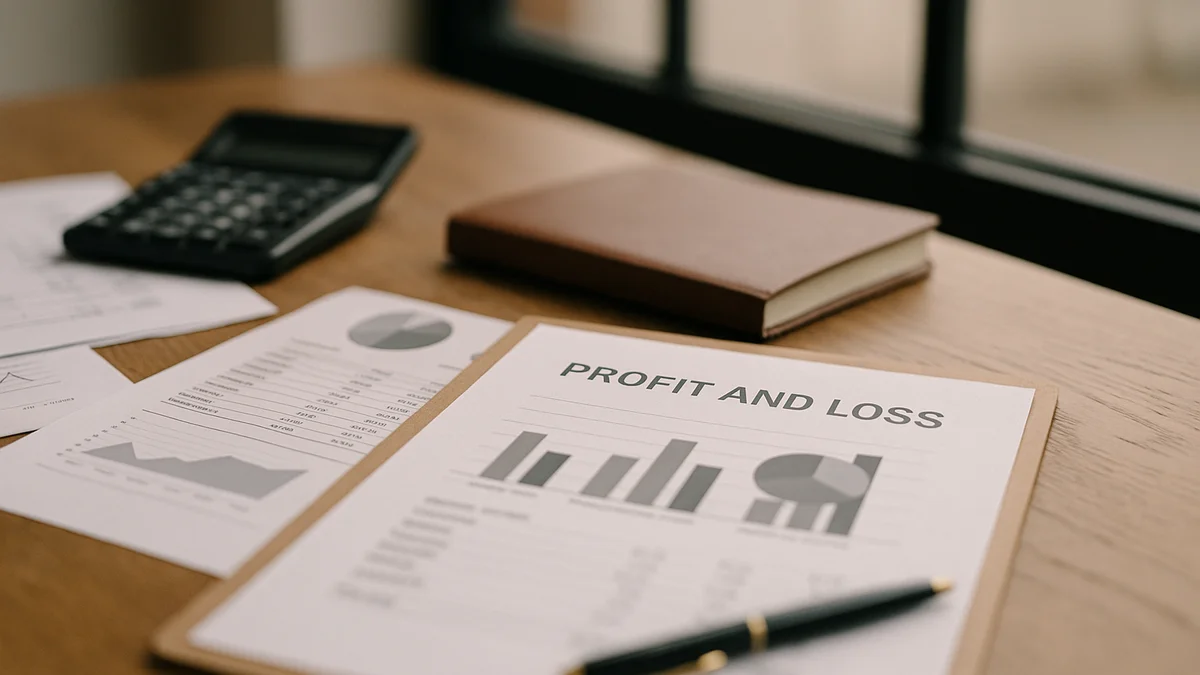
A small business can look healthy on the surface and still fail to make proper profit. Sales may be rising, the bank balance may move up and down, and the team may be busy all week. None of that proves the business is actually earning enough after normal costs.
The safest way to judge profitability is to use a short sequence of checks rather than one headline figure. Start with the profit and loss account, then test gross profit, overheads, net profit, cash flow and the value of your own time. That gives you a clearer answer to a simple question: is the business making real money, or just turning work into turnover?
Why ‘profit’ is easy to misunderstand
People often mix up three different things: sales, cash and profit. Sales tell you how much you billed or took at the till. Cash tells you how much money is in the bank right now. Profit tells you whether, after costs, the business kept any money for the owner or the company.
Those figures do not always move together. A business can take plenty of cash in a busy month and still be unprofitable if prices are too low, delivery costs are too high or overheads have crept up. It can also show a profit on paper while running short of cash because customers have not paid yet.
This confusion matters because small businesses often make decisions from the bank balance alone. That can lead to false confidence. You may hire too soon, spend on software you do not need, or drop prices because the cash account looks comfortable. The better approach is to use the accounts to see what the business really keeps after paying for normal trading.
Start with the profit and loss account
The profit and loss account, often called the P&L, is the main starting point. It shows income, direct costs and overheads over a set period, such as a month or a year. If you use bookkeeping software, the figures may already be there, but you still need to read them in the right order.
Start with turnover, which is total sales before costs. Then subtract direct costs, which are the costs that sit directly behind the sale. After that, subtract overheads, which are the running costs needed to keep the business going whether you sell a lot or a little.
If you only look at turnover, you can be misled by growth that is not profitable. A business that doubles sales but also doubles costly labour, materials or subcontracting may not be any better off. The P&L shows whether the extra sales are worth the extra effort and expense.
Gross profit first
Gross profit is what is left after direct costs are taken from sales. In plain English, it tells you whether you are charging enough to cover the cost of making or delivering what you sell.
If you run a café, direct costs may include ingredients and packaging. If you are a trades business, they may include materials and any subcontract labour tied to a job. If you are an agency, they may include contractor costs or paid production work linked to a client project.
Gross profit matters because it reveals pricing pressure early. If gross margin is weak, the business may be undercharging, buying poorly, wasting stock or spending too much to fulfil each sale. You can cut overheads later, but if the core offer does not make enough margin, the business will keep struggling.
A simple check is to ask: after direct costs, does each sale leave enough to pay the overheads and still produce a return? If not, you need to review prices, purchasing or the type of work you accept.
Net profit second
Net profit is what remains after overheads are deducted from gross profit. Overheads are the costs that support the business overall: rent, wages, software, insurance, phone bills, accountancy fees, marketing, admin and other fixed or semi-fixed expenses.
This is where some businesses appear profitable at gross margin level but fail overall. A shop may sell products at a healthy mark-up but lose much of that margin to rent and staff costs. A consultancy may bill well but spend too much on subscriptions, travel, office space or underused support staff.
Net profit is the figure most people mean when they ask whether a business is profitable. It shows what is left after normal trading costs, before considering how the owner is paid in practice. If the number is low or negative, the business is not generating enough from its usual activity.
Check whether the figures are realistic
The P&L is the right place to start, but it is only useful if the numbers reflect the way the business actually operates. A few adjustments help avoid false reassurance.
Adjust for the owner’s labour
One common trap is to assume a business is profitable because the owner has not taken a proper wage. That can make the accounts look better than the reality. If you are working full-time in the business but taking very little or no money out, the business may not be profitable in a practical sense.
To test this, ask what it would cost to replace your work. If you currently do sales, admin, delivery, quoting or customer service yourself, put a realistic value on that labour. Even if the business is not large enough to employ someone for every task, your time still has a cost.
This is especially important for sole traders and owner-managed companies. GOV.UK notes that sole traders keep the profits after tax, while directors of limited companies need to follow the rules when taking money out, such as paying themselves a salary, dividends or a directors’ loan. Those structures change how money is drawn out, but they do not change the underlying question: does the business produce enough surplus to pay the owner properly?
Separate normal trading from exceptional items
Not every cost should be treated the same way. A one-off repair bill, a legal fee linked to an unusual dispute or a major equipment purchase can distort a single month’s result. That does not mean you ignore it, but you should separate it from normal trading when judging ongoing profitability.
For example, buying a new van or replacing a broken oven may be necessary, but it is not part of the routine cost of each sale. If you include a large one-off purchase in one month’s profit and loss without context, the business may look unusually weak even though the underlying trading is fine.
A sensible approach is to look at trading profit before unusual items as well as the final bottom line. If one-off costs recur often, however, they are not really exceptional. They are part of the cost of doing business and should be planned for.
Account for unpaid invoices and seasonal trading
Profitability can also look better or worse depending on when you raise invoices and when customers pay. If you have completed the work but not yet collected the cash, your accounts may show sales without the bank balance reflecting them. That is not a reason to ignore the profit figure, but it is a reason to check aged debtors and payment terms.
Seasonal businesses need a wider view as well. A garden business, holiday let, retail shop or events company may make most of its money in a few months. A single weak month is not enough to judge the business, but a pattern across a full season or year will show whether the model works.
For that reason, many owners should compare at least the last three months, and often the last 12, rather than relying on a very recent period that may be unusually busy or quiet.
Use cash flow as a second test, not a substitute
Cash flow and profit are related but not the same. A profitable business can run short of cash if customers pay late or stock needs to be bought before the sales come in. A business can also have cash in the bank because of borrowing, tax timing or a big customer prepayment, even if underlying profits are weak.
Cash flow matters because businesses fail when they cannot pay bills on time. That is why cash should be treated as a second test of health, not as a replacement for profit. The bank balance tells you what you can pay today. It does not tell you whether the business is sustainable.
Use cash flow to answer questions such as:
- Are customers paying on time?
- Are you holding too much stock or work in progress?
- Are supplier payments arriving before income?
- Are taxes, rent or payroll creating regular pressure on the account?
If cash is tight but profit is acceptable, the answer may be better invoicing, tighter credit control or reducing stock levels. If cash is healthy but profit is weak, the business may be surviving for the moment while quietly losing money.
If you need a structured way to tighten timing between money in and money out, see how to improve cash flow in a small business UK.
Choose a simple profitability measure you can review every month
You do not need a dozen ratios to get a useful answer. A short monthly review can work well if it includes the right measures and you compare them over time.
At minimum, most small businesses benefit from tracking:
- Gross margin – gross profit as a percentage of sales.
- Net profit margin – net profit as a percentage of sales.
- Break-even point – the level of sales needed to cover all normal costs.
Gross margin shows how efficiently you turn sales into money after direct costs. Net margin shows what is left after overheads. Break-even tells you the minimum level of activity needed before the business starts making money.
If you prefer a slightly wider management view, combine those figures with a check on debtor days, cash balance and owner drawings. That gives you a more complete picture without turning the business into an accounting exercise.
If you want to keep the list of measures tight and useful, it may help to review how to choose KPIs for a small business.
Example scenario: a café that sells more but earns less
Imagine a small café that has had a good trading month. Sales are up because it has extended opening hours and sold more lunch covers. On the surface, that looks encouraging.
But the owner then notices that direct food costs have risen because of higher ingredient prices, and staff overtime has increased to cover the extra hours. Energy bills are also higher than expected. By the time rent, software and insurance are added, the extra turnover has not produced much extra profit.
This is a useful reminder that more sales do not always mean more profit. If costs rise in step with sales, the business may simply be working harder to stand still. The right response is not always to chase more volume; it may be to raise prices, simplify the menu, reduce waste or close the least profitable hours.
What to do if profit is weak
If the numbers show weak profit, resist the urge to make random cuts. Work through the problem in order so you do not damage the parts of the business that are already working.
- Review pricing first. Check whether you are charging enough to cover direct costs and overheads. If prices have not moved for a long time, or if discounts are common, this may be the fastest route to improvement.
- Cut waste and leakage. Look for stock loss, duplicated software, unnecessary subscriptions, poor purchasing discipline, excess travel or time spent on low-value work.
- Recheck overheads. Some fixed costs are justified, but others may have grown quietly. Compare them with the actual benefit they bring.
- Improve invoicing and collections. Invoice promptly, agree payment terms clearly and follow up late payers. Better cash collection can reduce pressure while you fix the underlying margin.
- Decide which work to stop. Low-margin products, clients or jobs can absorb time without creating enough return. Dropping weak work is often as important as winning new work.
If you need to decide whether the business model itself is workable, it may also help to revisit how to write a practical business plan or how to write a business plan for a small company in the UK and test the assumptions again.
Where staff, premises, stock or contracts create bigger downside risk, it is also worth checking what business insurance a small company needs in the UK, because some losses can turn a modest profit problem into a much larger one.
When to get extra help
Some businesses can judge profitability with a basic P&L and a monthly cash review. Others need more help because the accounts do not match day-to-day reality.
Consider bringing in a bookkeeper, accountant or management report if:
- you are unsure whether costs are coded correctly;
- you cannot separate direct costs from overheads clearly;
- your bank balance never seems to match the profit shown on paper;
- you have stock, work in progress or project-based billing;
- you are deciding whether to hire, borrow or change pricing.
For limited companies, the extra discipline of formal records matters even more. GOV.UK says directors have responsibilities including keeping company and accounting records, checking Companies House information and filing accounts and tax returns. Directors can hire help, but they remain legally responsible for the company’s records, accounts and performance. That makes accurate reporting worth getting right early.
GOV.UK also notes that a limited company is legally separate from its owners, while sole traders are personally responsible for business debts. That does not change how you measure profit, but it does change how much protection you have if the business goes wrong. If your figures are unclear and liabilities are growing, do not leave the review too long.
Use a short sequence, not a single number
There is no single number that tells you everything about profitability. A small business is more likely to be judged well if you work through a clear sequence:
- Check gross profit to see whether the core sale makes enough margin.
- Check overheads to see what the business needs to run.
- Check net profit to see what is left after normal trading costs.
- Check cash flow to make sure the business can pay its bills.
- Check owner pay to see whether the business really supports you.
If one of those areas is unclear, review the last three months of figures before you change prices, hire staff or commit to extra spending. Then choose one action for the next trading period: lift a price, cut a cost, tighten invoicing, or stop doing work that does not pay its way.
That is the practical test of profitability. Not whether the business looks busy, and not whether money happens to be in the bank today, but whether it earns enough after all normal costs to be worth carrying on.
Related articles
What records should a small business keep in the UK?
UK small businesses often keep too little, or far too much. The sensible answer is to keep the records that prove sales, costs, payroll, tax positions, contracts and compliance, then store them in a system you can actually use.
16 October 2026 · 16 min read
How to manage business cash flow during slow months
Slow months can expose weak cash flow even in healthy businesses. The answer is usually not blunt cuts, but better timing: forecast early, collect money faster, protect essential spending and use finance only when you know the size of the gap.
15 October 2026 · 11 min read
How to choose KPIs for a small business
Too many small businesses track numbers that fill a dashboard but do not change decisions. The better approach is to choose a small set of KPIs that link to your goals, can be reviewed regularly and tell you whether day-to-day actions are working.
13 October 2026 · 14 min read
How to reduce operating costs without cutting staff
If costs are rising but your team is already stretched, the answer is usually not a blunt headcount cut. A better approach is to map spend, remove waste, renegotiate recurring costs, improve processes and use capacity more efficiently while protecting service and morale.
13 October 2026 · 13 min read
How to create standard operating procedures that staff use
Standard operating procedures only help if people can use them in real work. This guide shows how to choose the right processes, map the actual steps, write clear instructions, test them with staff and keep them current without creating bureaucracy.
13 October 2026 · 12 min read
How to set business goals for the next 12 months
Broad aims like “grow sales” or “be more efficient” rarely help day to day. The useful job is to turn ambition into a small number of measurable 12-month goals, assign owners, and review progress regularly enough to adjust course before the year drifts.
12 October 2026 · 12 min read