What business insurance does a small company need in the UK?
A small UK company usually starts with the insurance that is required by law or needed to protect the business from the biggest realistic losses. The right mix depends on whether you employ staff, visit customers, hold stock, store data, use vehicles or work to contract terms.
By Amelia Hughes · Published 12 October 2026 · Updated 12 October 2026 · 13 min read
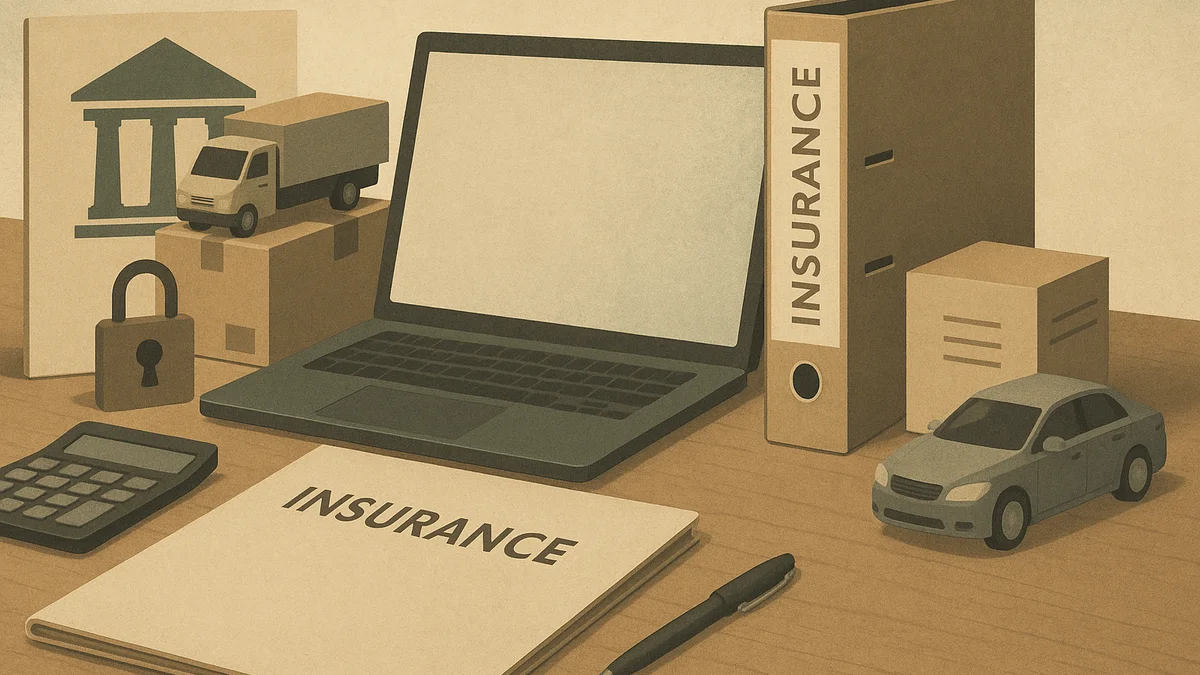
Once a small company wins its first proper contract, takes on its first employee or starts storing customer data, insurance stops being a box-ticking exercise and becomes part of the business model. The problem is that the market presents you with a long list of policies, and not all of them are relevant. Some are legally required. Some are sensible because one claim could wipe out cash flow. Others only make sense if your work, premises, contracts or equipment create that risk.
The practical way to choose is to start with exposure, not habit. Ask what could actually cause a serious loss: injury to someone, damage to a client’s property, a mistake in your advice, loss of stock, cyber attack, a van off the road or a contract that requires a specific level of cover. Then sort the policies into essentials, useful extras and decisions that depend on the way you trade.
Start with the question behind the question: what risks could actually threaten your business?
Insurance should follow the risks your business really has. A sole trader working from home, a limited company with two employees, and a manufacturer sending goods to retailers do not need the same cover, even if they all call themselves “small businesses”.
It helps to map the main exposure areas before you buy anything:
- People: injuries, illness, employment claims and mistakes made by staff.
- Premises: fire, flood, theft, vandalism or damage to a rented office, workshop or shop.
- Vehicles: vans, cars and deliveries used for business purposes.
- Data: customer records, payment details and business systems.
- Equipment: laptops, tools, machinery, fittings and stock.
- Products: items you make, repackage or supply.
- Contracts: terms that require cover at a set limit or with a specific insurer wording.
That list gives you the shape of the problem. The next step is to decide which risks are unavoidable, which ones would be expensive to fix, and which ones are too small to justify the premium.
The cover most small UK companies should check first
There are three policies that often sit at the top of the list for small businesses: employers’ liability, public liability and professional indemnity. They are not universal, but they are the most common starting point because they deal with the claims that can become costly quickly.
Employers’ liability insurance if you employ anyone, even part-time or temporary staff
If you employ staff, employers’ liability insurance is usually the first policy to check. GOV.UK notes that both sole traders and limited companies can have employees, and that limited company owners still have legal and financial responsibilities when running the company. If you bring anyone onto the payroll, even on a temporary, part-time or casual basis, you need to think about the risk of an employee injury or illness claim linked to the work.
In plain English, this cover exists because employment can create legal liability if someone is hurt or made ill through their work. That includes accidents in the workplace, but it can also involve tasks away from the premises if the job exposes staff to risk.
Do not assume that having only one employee, or paying someone irregularly, removes the need to check. The practical question is whether the person is your employee in law, not whether you think of them as “just helping out”. If you are using freelancers or agency workers, you should still understand where responsibility may sit, even if the policy requirement differs.
Public liability insurance for customer injury or property damage linked to your work or premises
Public liability insurance is usually worth serious consideration for any business that meets customers, works at client sites, receives deliveries, or has members of the public on its premises. It is there for claims that someone suffered injury or property damage connected to your business activities.
For example, if a customer slips in a shop entrance, a contractor damages a client’s floor while moving equipment, or a display stand falls and causes injury, public liability can help deal with the cost of the claim and the associated legal handling. The point is not that every business will have such a claim. The point is that when one happens, the bill can be disproportionate to the size of the company.
If you work entirely remotely and never meet customers, public liability may still be useful, but it is more obviously important if people visit you, you visit them, or you carry out physical work.
Professional indemnity insurance if you give advice, design, plans, specifications or other professional services where mistakes could cause client loss
Professional indemnity insurance matters when your work is judged on competence, judgement or advice rather than just on the delivery of a physical item. If you provide consultancy, accountancy, design, architecture, engineering, marketing strategy, software specification or other services where an error could lead to client loss, this cover deserves close attention.
It can respond where a client says your advice was wrong, your design was defective, your specification caused extra costs, or your work was delayed in a way that led to loss. That is different from public liability, which is about injury or property damage to third parties. Many owners mix the two up and end up buying one but not the other.
If your contracts require you to hold professional indemnity at a certain level, that requirement should shape the policy you buy. If you do not have such a clause, the decision is still practical: could one mistake create a claim large enough to threaten cash flow or force you to spend time and money on a dispute?
Cover that becomes important depending on how you trade
Once the core liability questions are addressed, the next group of policies depends more on your business model. These are often valuable, but they are not automatic.
Commercial property or contents insurance for stock, tools, fittings and office equipment
If you hold stock, own tools, use specialist equipment or have office fittings that would be expensive to replace, contents cover is worth reviewing. This can apply to a warehouse, workshop, retail unit or even an office full of laptops and furniture.
The key point is ownership and exposure. If a fire, flood or theft damaged the items you rely on, could the business carry on without them? A home laptop and a high-value set of tools are very different exposures, and the policy should reflect that.
If you rent premises, your landlord’s insurance usually does not cover your stock or your own business equipment. If you work from home, your personal home insurance may not automatically extend to business tools, stock or client visits. That separation matters because a business claim can fail simply because the wrong policy was asked to cover the loss.
Business interruption cover to help with lost income after a covered event
Business interruption insurance is often misunderstood. It does not usually replace everything you lose after a problem; it is designed to help with lost income and ongoing costs after a covered event, such as a fire or flood that stops you trading for a period.
That makes it most relevant where a pause in trading would be expensive. A shop without stock, a workshop without machinery, or a small manufacturer unable to use its premises may all have a stronger case than a service business that can keep operating remotely.
The practical question is not whether interruption is possible. It is whether a serious loss of trade would create a cash-flow problem before the business could reopen or recover.
Product liability if you make, supply or repackage goods
If you manufacture products, sell goods under your own brand, repackage items, or import products for resale, product liability is worth checking closely. It deals with claims that a product you supplied caused injury or damage.
This is especially important if your product reaches consumers, is used in a safety-critical setting, or could fail in a way that creates wider loss. A small trader does not need to be a big manufacturer to face a claim if something supplied is faulty.
If you only provide a service and never place goods into the market, product liability may be less relevant. But if you bundle products into a service, such as supplying parts, fit-out items or branded merchandise, ask whether the policy matches what you actually sell.
Cyber insurance if you hold customer data, take online payments or rely on digital systems
Cyber insurance is increasingly relevant for small businesses that rely on email, cloud software, online payments or customer records. If your systems are locked, data is lost or a phishing attack leads to fraud, the cost is not limited to the IT problem itself. There can be recovery costs, business interruption, notification duties and possible client disputes.
Even if you do not think of yourself as a “tech business”, you may still be exposed if you keep personal information, take card payments, or depend on a booking system, accounts package or online order platform. The issue is not whether the business is digital by label; it is whether the business would struggle if the systems stopped working.
Cyber cover is still worth reading carefully. Some policies focus on incident response and system recovery, while others are narrower. If the wording only helps in a very limited scenario, it may not solve the real problem you face.
Vehicles, premises and people: separate decisions that are easy to mix together
Many small-business insurance mistakes happen because owners combine different risks in one mental bucket. In reality, vehicles, premises and staff each create separate questions.
A van used for work needs a policy that covers business use, not just personal motoring cover. If you own more than one vehicle or have several drivers, a fleet policy may be worth comparing with separate cover. The right answer depends on how many vehicles you run, who drives them and how they are used.
Premises are another separate issue. If you rent, the landlord’s insurance may cover the building but not your contents, stock or business interruption. If you own the premises, you may need to think about buildings cover as well as contents and liability. If customers visit, or you store significant stock, the exposure is larger than for a business that only works from a desk at home.
Home-based businesses often assume they do not need extra cover because they already have home insurance. That can be a costly assumption. Personal cover may not protect business equipment, visitors or work-related stock in the way you expect. If your home is also your workplace, ask the insurer exactly what is included and what is excluded.
What many owners overlook in the policy wording
The headline name of a policy matters less than the wording underneath it. A cheap policy can look attractive but still fail to help when you need it because the limit is too low, an exclusion removes the relevant risk, or a condition was not met.
These are the terms to understand before you buy:
- Exclusions: risks the policy will not cover. For example, a policy may exclude certain activities, territories or types of loss.
- Policy limit: the maximum the insurer will pay for a claim or for the policy period.
- Excess: the amount you pay yourself before the insurer contributes.
- Claims conditions: steps you must follow, such as reporting incidents quickly or keeping security measures in place.
- Underinsurance: where the amount insured is too low for the true value at risk.
- Any one claim vs aggregate: whether the limit applies to each individual claim or to all claims combined over the policy period.
Those terms sound technical, but they affect whether the policy is actually useful. A business can be insured and still be badly exposed if the wording does not match how it trades.
Illustrative example: a small design studio buys professional indemnity insurance with a limit that looks reasonable on price alone. The policy excludes a key type of work it regularly does, and the limit is set on an aggregate basis. That means the total available for multiple claims is capped together rather than refreshed for each claim. If two disputes arise in the same year, the business may run out of cover sooner than it expected. The policy existed, but it did not really fit the risk.
The lesson is simple: do not compare policies only on price. Compare what they actually cover, what they exclude, and how they respond when more than one issue arises.
How to choose the right level of cover without overbuying
You do not need every policy a broker can name. You need the cover that matches the way your business makes money and the losses it could not absorb easily.
A practical sequence is:
- List your activities. Write down what you sell, where you work, whether customers visit, whether you visit customers, and whether you hold stock, equipment or data.
- Identify legal requirements. Check whether any cover is compulsory for your circumstances. If you employ anyone, start there.
- Check contract terms. Some clients, landlords or lenders require specific cover or minimum limits.
- Think about the expensive losses. Ask which claim or incident would be hard to fund from cash reserves.
- Match policy wording to your activities. Read exclusions, limits and conditions before comparing price.
- Review each year. Revisit the policy if you hire staff, move premises, buy equipment, add a van or change the services you provide.
This approach keeps the decision tied to the business you actually run. It also helps you avoid buying cover for risks you do not have, while missing the ones you do.
When specialist advice is worth paying for
For many straightforward businesses, an informed owner can compare policies sensibly once the main risks are clear. But specialist help is often worth paying for when the risk picture becomes less standard.
A broker or adviser can be useful if you have unusual stock values, regulated work, several trading locations, higher professional liability exposure, or contract-heavy relationships with bigger customers. They may also help where the wording is complex or the market is narrow.
Even then, do not hand over the decision completely. A broker can help you search the market and explain options, but you still need to understand the basics: what is required, what is optional, what is excluded and what would happen if you made a claim. Otherwise, you may buy a policy that sounds suitable but does not fit your operations.
Quick priorities for a small UK company
If you want a simple order of work, start here:
- Confirm whether you have any legal minimums to meet.
- Check whether employees, customers, client work or premises create a clear liability risk.
- Protect the assets that would be expensive to replace: stock, tools, equipment and data.
- Read the exclusions and limits before you compare price.
- Review the policy when the business changes, not just when the renewal notice arrives.
For a small company, the right insurance is rarely about buying the biggest package. It is about buying the cover that would keep the business going if something serious happened, and leaving out the extras that do not match the way you trade.
Before you buy, write down your staff, premises, vehicles, stock, data and client-contract risks, then check whether each exposure is legally required, contractually required or simply sensible protection. That gives you a clearer shortlist and makes it easier to compare policies on cover, exclusions and limits rather than price alone.
Useful official guidance to check alongside your policy review
For the business structure and responsibilities that can affect your insurance needs, GOV.UK’s guidance on setting up a business and setting up a limited company is a sensible place to start. The structure you choose affects legal responsibilities, and limited companies have their own record-keeping and filing duties. Insurance does not replace those responsibilities, but it can help manage the risks around them.
Related articles
What records should a small business keep in the UK?
UK small businesses often keep too little, or far too much. The sensible answer is to keep the records that prove sales, costs, payroll, tax positions, contracts and compliance, then store them in a system you can actually use.
16 October 2026 · 16 min read
How to manage business cash flow during slow months
Slow months can expose weak cash flow even in healthy businesses. The answer is usually not blunt cuts, but better timing: forecast early, collect money faster, protect essential spending and use finance only when you know the size of the gap.
15 October 2026 · 11 min read
How to measure whether a small business is profitable
A business can look busy, generate sales and still fail to make real money. Here is a practical way to judge profitability using profit and loss, gross margin, overheads, cash flow and owner time without being misled by the bank balance.
13 October 2026 · 12 min read
How to choose KPIs for a small business
Too many small businesses track numbers that fill a dashboard but do not change decisions. The better approach is to choose a small set of KPIs that link to your goals, can be reviewed regularly and tell you whether day-to-day actions are working.
13 October 2026 · 14 min read
How to reduce operating costs without cutting staff
If costs are rising but your team is already stretched, the answer is usually not a blunt headcount cut. A better approach is to map spend, remove waste, renegotiate recurring costs, improve processes and use capacity more efficiently while protecting service and morale.
13 October 2026 · 13 min read
How to create standard operating procedures that staff use
Standard operating procedures only help if people can use them in real work. This guide shows how to choose the right processes, map the actual steps, write clear instructions, test them with staff and keep them current without creating bureaucracy.
13 October 2026 · 12 min read