How to improve cash flow in a small business UK
Cash flow problems can hit even profitable small businesses when customers pay late, stock ties up money or bills arrive before income. This guide explains practical ways to improve timing, control outgoings and decide when borrowing is worth considering.
By Daniel Foster · Published 12 October 2026 · Updated 12 October 2026 · 11 min read
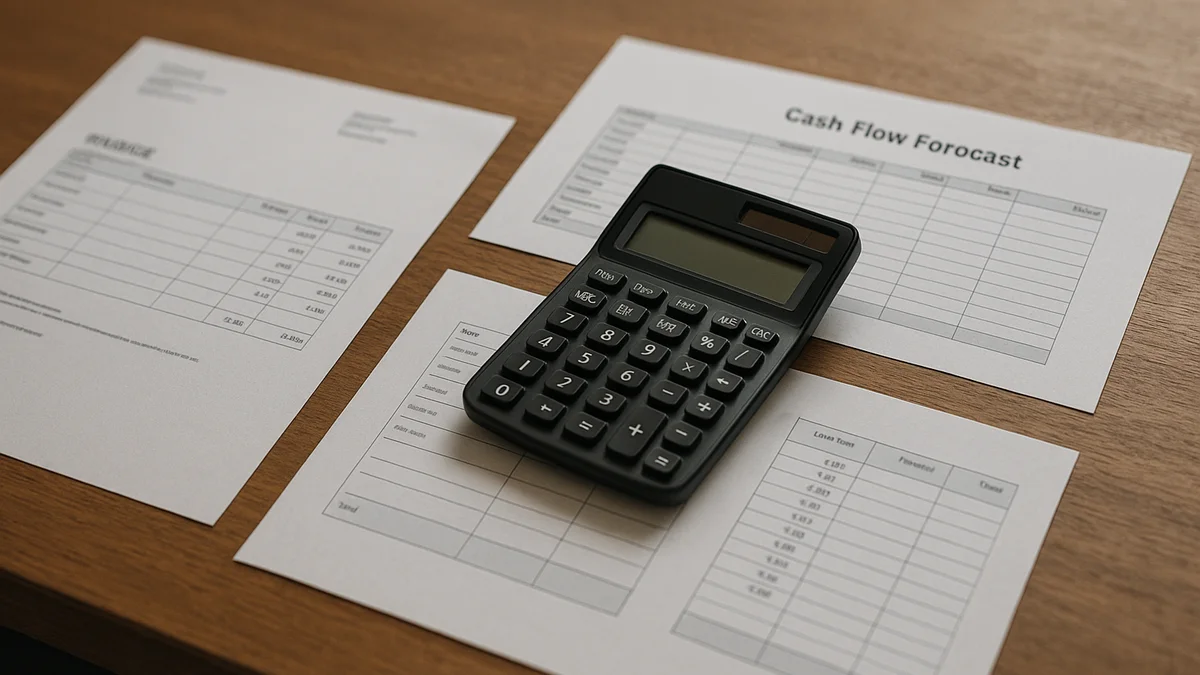
Many small businesses are profitable on paper and still run short of cash. The reason is usually timing: customers pay late, stock is bought before it is sold, payroll and rent fall due every month, and VAT or tax bills can arrive before the money has fully come in. If you are running the business yourself, that mismatch can feel more pressing than the profit figure in your accounts.
The good news is that cash flow usually improves through a series of practical decisions rather than one dramatic fix. The aim is to get paid faster, forecast more accurately, slow avoidable spending where you can, and use finance carefully only when the gap cannot be closed another way.
Why cash flow problems happen even when sales look healthy
Cash flow is the movement of money in and out of the business. Profit is different: it is the result after income and expenses are matched, which does not always show when cash actually lands in your bank account. That is why a business can have a healthy order book and still struggle to pay suppliers this week.
Common pressure points include late customer payments, stock purchases made well before sale, and fixed bills such as rent, payroll and insurance that arrive on a schedule whether or not sales are strong that month. VAT is another obvious strain because it is collected or paid through the business, but the money is not yours to treat as spare cash. For limited companies, directors remain responsible for company records, accounts and tax filings even if day-to-day tasks are delegated, so cash control is not something to leave unattended https://www.gov.uk/running-a-limited-company.
The practical point is not to panic about every quiet week. It is to spot the pattern early enough to act before a shortfall becomes a crisis. Once you know whether the problem is timing, margin, overstocking or slow payment, you can choose the right response instead of reaching for borrowing too soon.
Start with a simple cash flow view you can trust
A cash flow forecast does not need to be elaborate to be useful. For a small business, a rolling 8- to 13-week view is often enough to show when money is likely to tighten. List expected receipts, such as customer payments, and expected outgoings, such as wages, rent, supplier bills, tax, software subscriptions and loan repayments. Then update it every week so that it reflects what has actually happened.
The value of a rolling forecast is that it shows shortfalls early. A spreadsheet with neat assumptions is not helpful if it sits untouched while the bank balance falls. Keep the format simple enough that you will use it, and make sure it shows both what is due and when it is due.
What to include in the forecast
- Opening bank balance.
- Expected customer receipts, by date where possible.
- Payroll, PAYE and pension payments.
- Supplier invoices already committed.
- Rent, utilities, insurance and software costs.
- VAT, Corporation Tax or other known tax dates.
- Any planned stock purchases or equipment spending.
Once the forecast is in place, use it as a decision tool. If a large payment is due before a customer invoice is likely to clear, you can act in advance: chase the debtor, delay a non-essential purchase, renegotiate a supplier date, or reduce drawings if you are a director-owner. That is far easier than trying to sort it out after the bank balance has already dropped.
Get paid faster without damaging customer relationships
For many small businesses, the quickest route to better cash flow is to improve the speed and reliability of invoices being paid. That does not necessarily mean becoming tougher in a way that harms customer goodwill. It means being clearer, more consistent and less forgiving of avoidable delays.
Send invoices as soon as the work is completed or the goods are delivered. If you wait until the end of the week or the end of the month, you are effectively giving customers extra credit for free. Make sure each invoice is easy to process: correct legal name, clear description, invoice number, amount due and payment date. GOV.UK says that where both you and the customer are VAT-registered in a business-to-business transaction, you must give an invoice by law, and the invoice must include certain information including how much the customer needs to pay and when they must pay it https://www.gov.uk/invoicing-and-taking-payment-from-customers.
Clear payment terms matter as much as clear invoices. If you intend to charge within 14 days, say so plainly. If your customers regularly push for longer terms, decide whether the extra credit is worth the strain on cash flow. In some cases, a slightly slower sales process may still be better than selling more business on terms that leave you funding your customers.
Practical steps that usually help
- Invoice immediately after delivery, milestone or completion.
- State payment terms in writing before the work starts.
- Ask for deposits on larger jobs or custom work.
- Use staged billing on longer projects.
- Set a fixed overdue-chasing routine rather than chasing only when you remember.
Deposits and staged billing are particularly useful where your costs come early. If you need to buy materials, reserve subcontractor time or commit staff before the final payment arrives, asking for money upfront reduces the amount of cash your business has to carry.
Practical example: a service business with upfront and final billing
A small design or marketing agency taking a 50% deposit before starting a project and the balance on delivery reduces exposure to slow-paying clients. The deposit helps cover early labour and software costs, while the final invoice is tied to completion rather than left open-ended. The business still needs clear terms and follow-up, but it is less likely to fund the whole job itself while waiting for payment.
The trade-off is straightforward: asking for part payment in advance may put off some customers, especially where they are used to paying later. For work that is bespoke, high-risk or resource-heavy, however, it is often a sensible condition rather than an aggressive one. The point is to match payment terms to the cash demands of the work.
Decide which costs and commitments can be delayed, reduced or reshaped
Not every outgoing can be cut, and not every cost should be cut. Payroll, rent and core supplier payments may be unavoidable. But many businesses still carry costs that can be reviewed without damaging day-to-day trading. The question is whether a cost is essential now, essential later, or discretionary.
Begin with supplier terms. If you have a good payment history, ask whether terms can be extended from, say, 14 days to 30 days, or whether the due date can better match your own customer receipts. Even a modest shift can ease pressure if several bills fall at the wrong moment. Be careful not to treat this as a permanent fix if your underlying margins are weak; it only works if the business can still pay reliably on the new terms.
Review subscriptions, memberships and services that have quietly accumulated. Some are genuinely useful; others are convenient but rarely used. Cancel what no longer earns its place, but keep the tools that save time or reduce error. A slightly lower monthly outlay is not worth it if it causes admin to fall behind or creates more manual work elsewhere.
Useful questions when reviewing spending
- Does this spend directly support sales, delivery or legal compliance?
- Can it be paused for a month without causing damage?
- Is there a cheaper way to achieve the same result?
- Will delaying it improve cash flow enough to matter?
For planned purchases, look at timing rather than just price. If a new machine, vehicle or software contract is desirable but not urgent, it may be better to delay it until after a major customer payment lands. Staggering purchases can preserve liquidity, which is the amount of cash available to meet near-term obligations.
Check whether stock, jobs or projects are tying up too much cash
Stock is one of the easiest ways for cash to disappear quietly. Money goes out the door the moment you order, but it may not come back for weeks or months. If you hold more stock than you need, or buy in bulk simply because the unit price looks better, you can end up with cash sitting on shelves.
The same issue applies to jobs and projects. A long project with large upfront material costs, or a contract that requires you to pay suppliers before you bill the customer, can create a financing need even when the sale itself is profitable. The task is to find where cash gets tied up longest and reduce it where possible.
That may mean ordering smaller quantities more often, tightening your stock range, or reviewing slow-moving items that do not turn quickly. It may also mean changing project terms so that materials are paid for earlier in the schedule, or that you no longer take on work that demands too much working capital for too little return.
Practical example: a retailer cutting slow-moving stock
A small retailer carrying too much stock in low-turnover lines can improve cash flow by lowering order sizes on those items and focusing on the core range that sells regularly. The business may give up some bulk-buy discounts, but it releases cash, reduces storage pressure and lowers the risk of markdowns later. That trade-off is often worth it if the business is otherwise stretched.
This is a reminder that cash flow is not only about chasing debtors. Sometimes the issue is money already tied up in stock, work in progress or slow projects. If you only focus on invoices, you may miss the larger problem.
Use pricing, terms and margins to improve cash position over time
If your margins are too thin, no amount of careful chasing will create lasting stability. Over time, cash flow improves when the business earns enough on each sale to cover the cost of delivering it and still leave room for delays, waste and unexpected bills. That may mean raising prices, even if cautiously.
Price rises can be uncomfortable, especially for owner-managed businesses that value long-standing customers. But holding prices down while costs rise usually creates a worse problem later. If your prices have not been reviewed for a long time, or if certain jobs are clearly harder to serve than others, the cash flow strain may be a sign that your pricing structure is out of date.
Terms can also help. Minimum order values can stop you spending time and cash on low-value work. Charging for admin-heavy tasks, urgent turnarounds or accounts that create credit risk can improve both margin and cash predictability. You do not need to charge for everything separately, but you do need to know which services consume time without producing enough return.
Know when external finance helps and when it only postpones the problem
External finance can be useful when the business is sound but timing is awkward. An overdraft, invoice finance arrangement or short-term loan may bridge a genuine temporary gap. The mistake is to use borrowing before you have addressed the real reason cash is tight.
Before you borrow, ask what will happen to the business after the money arrives. If the issue is late payment, can you tighten invoicing and chasing first? If the issue is stock, can you buy less? If the issue is poor margin, borrowing only buys time while the same loss-making pattern continues. Finance should support a solution, not hide the need for one.
Government guidance also points businesses towards support and finance schemes, including local and national options, through GOV.UK https://www.gov.uk/business-finance-support. That may be worth checking if you need advice as well as funding. The main rule is still the same: borrow only after you have improved billing, forecasting and spending discipline as far as you reasonably can.
Put a weekly cash routine in place
Cash flow improves when someone owns the routine. In a small business, that often means the owner-director or office manager checking the numbers at the same time each week. A short review is better than a long review that happens only when there is a problem.
Use the weekly check to look at four things: bank balance, overdue invoices, bills due in the next few weeks, and any changes to the forecast. Then decide what action is needed. That may mean chasing a customer, delaying a non-essential spend, moving a supplier payment date, or escalating a possible shortfall before it becomes urgent.
A simple weekly cash agenda
- Update the 13-week forecast.
- Review the current bank balance.
- List invoices overdue by more than agreed terms.
- Check the next two to four weeks of payments due.
- Agree who will chase debtors and who can approve extra spending.
Keep responsibilities clear. One person should own payment chasing, even if others raise invoices. One person should approve non-essential spending. If everyone assumes someone else has checked the numbers, the business loses control by default.
A practical 30-day checklist
If your cash position is already under pressure, do not try to fix everything at once. Start with the actions most likely to release cash quickly without harming service.
- Build a rolling 13-week cash forecast and update it weekly.
- Invoice immediately and check that every invoice shows the correct payment date.
- Chase overdue invoices on a fixed schedule.
- Ask for deposits or staged billing where the job justifies it.
- Review supplier terms and see whether any can be extended.
- Cut or delay spending that does not support sales, delivery or compliance.
- Reduce cash tied up in stock, work in progress or slow projects.
- Review whether pricing and terms still leave enough margin.
- Only then compare borrowing options if a gap still remains.
Most small-business cash problems improve when you stop treating them as a finance-only issue. Timing, terms, stock and spending decisions all matter. If you work through them in order, you are more likely to protect sales and service while reducing the strain on the bank account.
Related articles

What records should a small business keep in the UK?
UK small businesses often keep too little, or far too much. The sensible answer is to keep the records that prove sales, costs, payroll, tax positions, contracts and compliance, then store them in a system you can actually use.
16 October 2026 · 16 min read
How to manage business cash flow during slow months
Slow months can expose weak cash flow even in healthy businesses. The answer is usually not blunt cuts, but better timing: forecast early, collect money faster, protect essential spending and use finance only when you know the size of the gap.
15 October 2026 · 11 min read
How to measure whether a small business is profitable
A business can look busy, generate sales and still fail to make real money. Here is a practical way to judge profitability using profit and loss, gross margin, overheads, cash flow and owner time without being misled by the bank balance.
13 October 2026 · 12 min read
How to choose KPIs for a small business
Too many small businesses track numbers that fill a dashboard but do not change decisions. The better approach is to choose a small set of KPIs that link to your goals, can be reviewed regularly and tell you whether day-to-day actions are working.
13 October 2026 · 14 min read
How to reduce operating costs without cutting staff
If costs are rising but your team is already stretched, the answer is usually not a blunt headcount cut. A better approach is to map spend, remove waste, renegotiate recurring costs, improve processes and use capacity more efficiently while protecting service and morale.
13 October 2026 · 13 min read
How to create standard operating procedures that staff use
Standard operating procedures only help if people can use them in real work. This guide shows how to choose the right processes, map the actual steps, write clear instructions, test them with staff and keep them current without creating bureaucracy.
13 October 2026 · 12 min read